Democratic Republic of Congo's World Cup Return: A Journey Through Politics and Fear
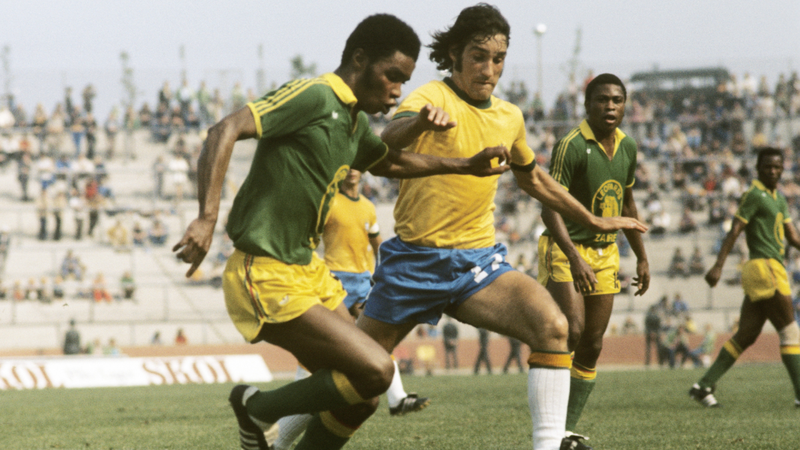
The Democratic Republic of Congo (DRC) returns to the 2026 World Cup, marking its first appearance since 1974, a tournament steeped in political turmoil and dictatorship. In 1974, then known as Zaire, the team faced not only tough opponents but also the oppressive regime of Mobutu Sese Seko. Patrice Lumumba, the nation’s first Prime Minister, was assassinated in 1961, and Mobutu's authoritarian rule began in 1965. During this era, Mobutu saw sports as a means to bolster his regime’s image. He invested in bringing players back from Belgium, notably those from Mazembe, who would later achieve international recognition. Zaire made history by qualifying for the World Cup, becoming the first Sub-Saharan African team to do so. However, their journey was marred by Mobutu's threats after a 2-0 loss to Scotland. Following a disastrous 9-0 defeat to the former Yugoslavia, Mobutu’s intimidation escalated, culminating in a chilling ultimatum before their final match against Brazil. Players were warned of dire consequences if they lost by more than three goals. In a desperate act during that match, defender Ilunga Mwepu kicked away a free kick to provoke a red card, symbolizing the fear and political pressure that hung over the squad. Mwepu later revealed, "I wanted a red card... we were told to play, otherwise we'd be sent to a dungeon." The tournament also reflected broader political tensions, such as the Cold War dynamics seen in the matches involving East Germany and West Germany. The 1974 World Cup was a microcosm of the political landscape, with sports often acting as a stage for ideological conflicts. In the end, Zaire's World Cup experience remains a poignant reminder of the intersection between sports and politics, illustrating how the stakes extend far beyond the pitch.
Source: CBS Sports - 2026-06-04