India's T20 Triumph: A Clear Signal to the World of Cricket
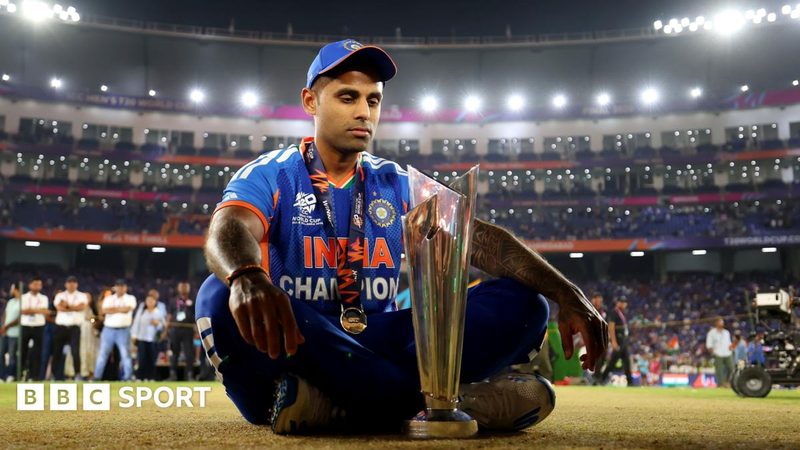
India has solidified its dominance in the T20 format by clinching its third consecutive white-ball trophy, a remarkable achievement that raises questions for the rest of the cricketing world. After a disappointing loss in the 2022 World Cup final, the team rebounded with victories in Barbados (2024) and Dubai last year, setting the stage for a home final in Ahmedabad. Fans poured into the stadium with high expectations, reminiscent of the pressure faced in past finals. Captain Suryakumar Yadav dismissed the weight of history, focusing instead on the present, stating, "That's over, sir. It's been three years, sir. Now T20 is here." India's journey to victory was marked by formidable performances, particularly after a shaky start against the United States and a loss to South Africa. The team showcased its prowess, scoring over 250 runs three times against Zimbabwe, England, and New Zealand—an unprecedented feat in T20 World Cup history. Key contributions came from: Ishan Kishan with early fifties Sanju Samson scoring crucial runs in the finale Shivam Dube’s late-order hitting Axar Patel’s fielding brilliance Abhishek Sharma finding form when needed New Zealand's captain Mitchell Santner acknowledged the challenge India poses, stating, "They know how to play in these conditions." With this victory, India has emerged as the first men's team to defend the T20 title and win it on home soil. Their record of only two losses in 34 matches over the last four global events highlights their dominance. However, the competition must learn from missed opportunities, such as dropped catches by the West Indies and Harry Brook. Looking ahead, the cricketing landscape will shift to Zimbabwe, Namibia, and South Africa for the next 50-over World Cup in 2027, followed by the 2028 T20 World Cup in Australia and New Zealand. Captain Suryakumar aims for Olympic gold and continued success, declaring, "We want to continue doing that in 2027, 2028, 2029 and never stop." The challenge is clear: the rest of the world must catch up to India, a task that will require significant effort and strategy.
Source: BBC Sport - 2026-03-08