Cavaliers' Risky Foul Strategy Backfires in Overtime Loss to Pistons
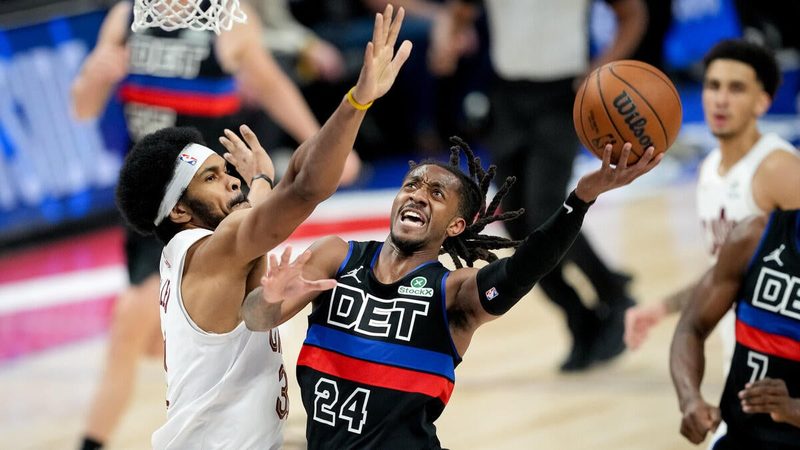
In a thrilling matchup on Friday, the Cleveland Cavaliers faced a heartbreaking defeat against the Detroit Pistons, losing 122-119 in overtime after a controversial foul strategy backfired. The Cavaliers, who had a six-point lead with under two minutes remaining, saw their chances dwindle when Cade Cunningham fouled out, leaving the Pistons with a mere 9% chance of a comeback. Despite Cunningham's absence, the Pistons rallied, narrowing the deficit to three points with just 6.5 seconds left. This set the stage for a pivotal decision by Cavaliers coach Kenny Atkinson: to foul the Pistons while holding a three-point lead. Statistics favor fouling to prevent a game-tying shot, yet Atkinson's choice led to a critical moment as Jaylon Tyson intentionally fouled Daniss Jenkins, who promptly launched a shot from beyond half court. Jenkins, recently converting his two-way contract to a standard NBA deal, capitalized on the opportunity, sinking all three free throws and forcing overtime. The Cavaliers faced a tough loss, compounded by the absence of stars Donovan Mitchell and James Harden. The article raises an essential question about the NBA's rules on intentional fouls in late-game scenarios. Critics argue that allowing teams to commit fouls to avoid scoring opportunities undermines the spirit of fair competition. The author suggests re-evaluating the rules to penalize such tactics more severely, proposing that any intentional foul away from the ball with less than ten seconds remaining should result in three free throws. This incident serves as a wake-up call for the league to reconsider its end-of-game regulations, ensuring that fans witness the most exciting moments of the game rather than being deprived of them by strategic fouling.
Source: CBS Sports - 2026-02-28